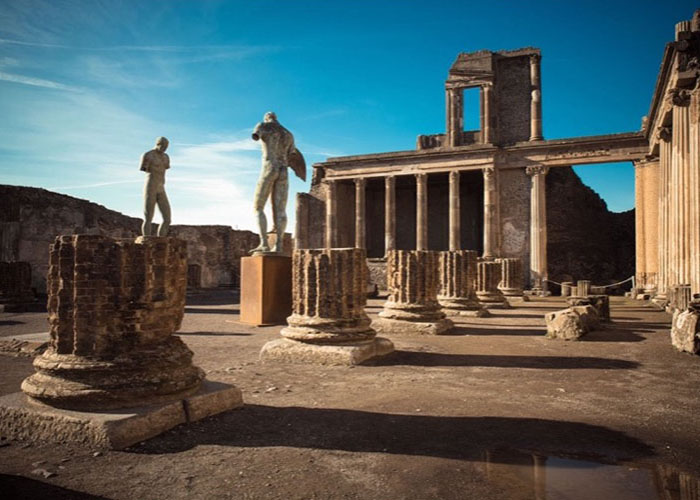
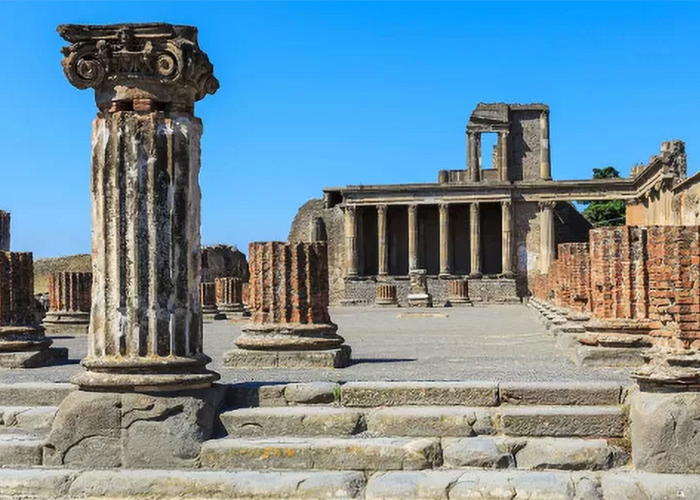
Discover the magic of this remote place, which has been inhabited for more than 2000 years. Rediscovering a world that has been buried in ashes for centuries means finding all our oldest culture and our great history intact.
This tour shows you Pompeii’s ruins, one of the most significant proofs of Roman civilization; this city is marked by outstanding evidence of the art, customs, trades and everyday life from the past. The city has re-emerged from the darkness of the centuries, just as it was when it was unexpectedly buried in the thick layer of ashes and lava that destroyed it during the devastating eruption of Vesuvius in 79 AD.
WALKING TOUR TO HISTORICAL CITY CENTRE (May 17th 2025)
Discover the city and its wonders during a walking tour that shows you all about Naples’ past and present, through the many sovereigns and dynasties that ruled the city.
During this guided tour, you will go through Spaccanapoli, the main street that crosses the old historic centre of the city; this area is chaotic, as well as vibrant, colourful, noisy, mysterious, and beautiful. In other words, it is the real essence of Naples.
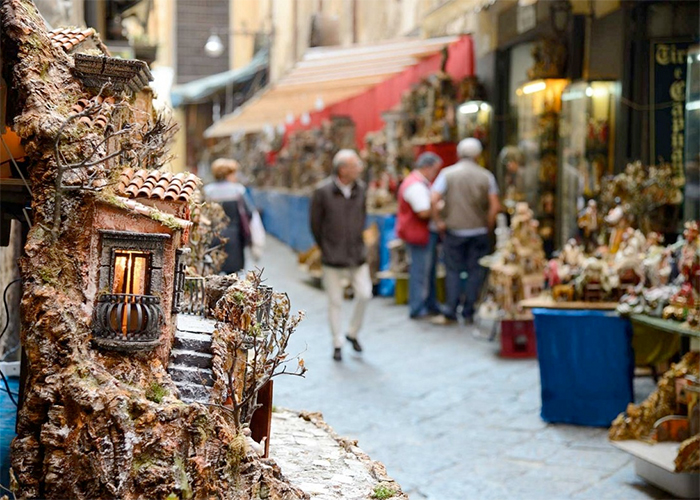
As you go on, you will walk through San Gregorio Armeno, the heart of traditional artisan workshops and famous Christmas handcraft.
THE NATIONAL ARCHAEOLOGICAL MUSEUM OF NAPLES (May 17th 2025)
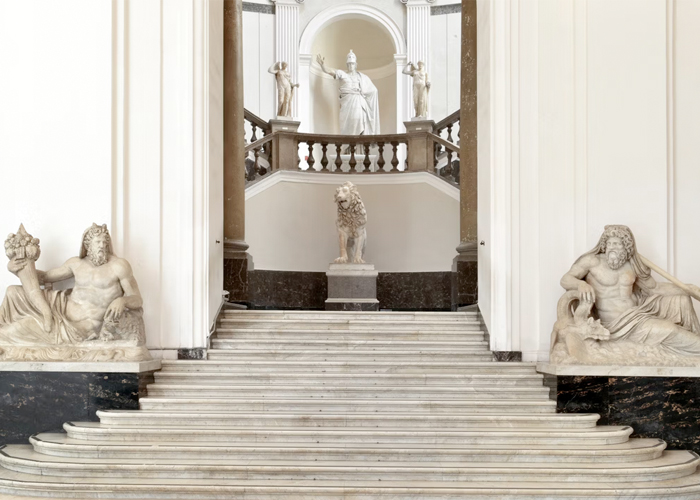
The National Archaeological Museum of Naples (MANN) is one of the most important archaeological museums in the world, housing an exceptional collection of ancient Roman, Greek, and Egyptian artifacts.
Located in the heart of Naples, the museum’s collection includes sculptures, frescoes, mosaics, everyday objects, and luxury items, offering a detailed glimpse into the daily life of the ancient Romans and Greeks. Some of its most famous exhibits include the Alexander Mosaic, a stunning depiction of the Battle of Issus, and the collection of erotic art from Pompeii, which is housed in a separate room.
In addition to Roman and Greek artifacts, the museum also features a significant Egyptian collection, including mummies and statues. The museum is a key institution for understanding the cultural and historical heritage of ancient civilizations and today it remains a major attraction for tourists from around the world.
PIO MONTE DELLA MISERICORDIA OF NAPLES (May 17th 2025)
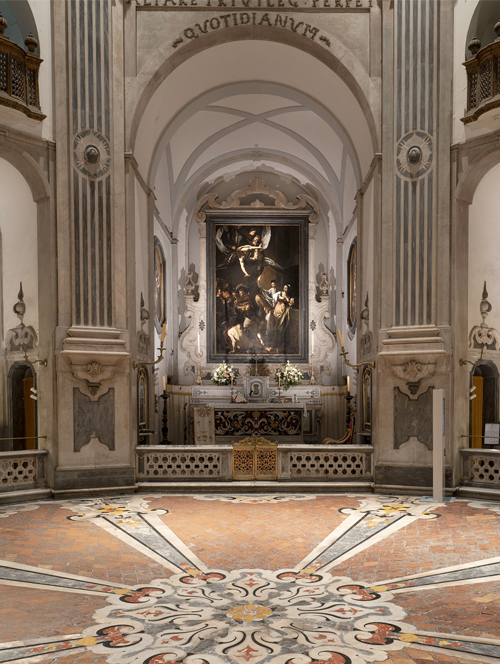
The Pio Monte della Misericordia is one of the most important historical institutions in Naples, founded in 1602 as a religious confraternity with the mission to assist the poor and needy in the city. Its headquarters, an impressive Baroque building located in the heart of Naples’ historic centre, is a site of great cultural and artistic significance.
The church of the Pio Monte della Misericordia is famous for housing one of Caravaggio’s masterpieces, “The Seven Works of Mercy”, painted in 1607.
The painting is an extraordinary example of Caravaggio’s realism and expressive power and is considered one of his most significant works.
The building is a perfect example of Baroque architecture with his beautiful decorations. It remains an important tourist attraction and cultural centre.
SAN GENNARO TREASURE
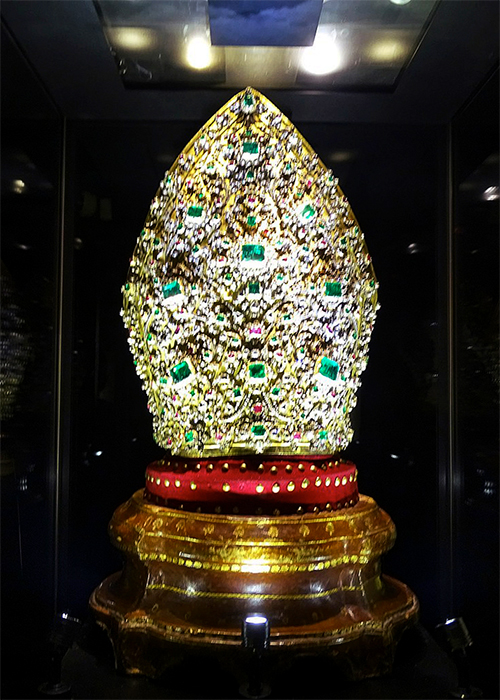
The San Gennaro Treasure is a priceless collection of religious artifacts, located in the Cathedral of Naples (Cattedrale di San Gennaro). It is dedicated to the patron saint of the city, San Gennaro (Saint Januarius), and contains the collection of gold and silver objects, precious reliquaries and crowns.
Among the most famous pieces is a golden bust that holds the vials of his blood, which are said to miraculously liquify twice a year.
The Treasure is a symbol of the devotion of Neapolitan people to their patron saint, and it reflects the city’s rich religious and artistic history.
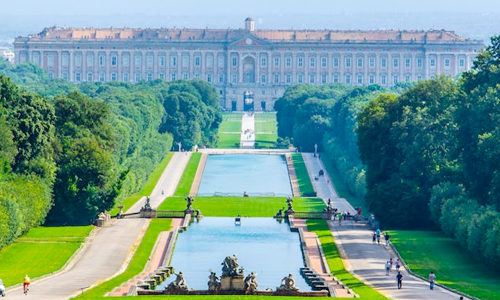
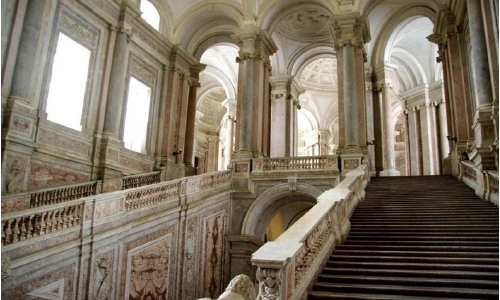
Guided visit of the Royal Palace and its wonderful park. The Royal Palace of Caserta was commissioned by Charles III of Bourbon, who decided to build the Versailles of his kingdom in this fertile region.
This architectural masterpiece was designed by Luigi Vanvitelli. It was one of the largest buildings erected in Europe during the 18th century. It comprises 1200 rooms connected by 34 staircases and illuminated by 1.970 windows. The magnificent garden inspired by the park of Versailles, starts from the back façade of the palace, flanking a long alley with artificial fountains and cascades.
You will also visit a botanical garden, called “The English Garden”.